



I know you’ve seen them. You may have even bought them. (I have!)The cute little tins. The Pinterest-y cards. “50 fun ideas to keep boredom at bay!” Eco-friendly! Printed with vegetable inks! Basically, they scream: “good parent” approved.
But let’s call it what it is, another entertainment trap for parents.
The activities themselves aren’t harmful. But they do reinforce the exact dynamic most parents are trying to escape: You doing the work to keep your kid entertained.
These cards aren’t designed for your child. They’re designed for you.
They assume you’ll read the instructions, gather the materials, initiate the steps, manage the flow, and clean it all up at the end. Which means the second your kid says, “I’m booooored,” you’re now on deck as the full-time cruise director again.
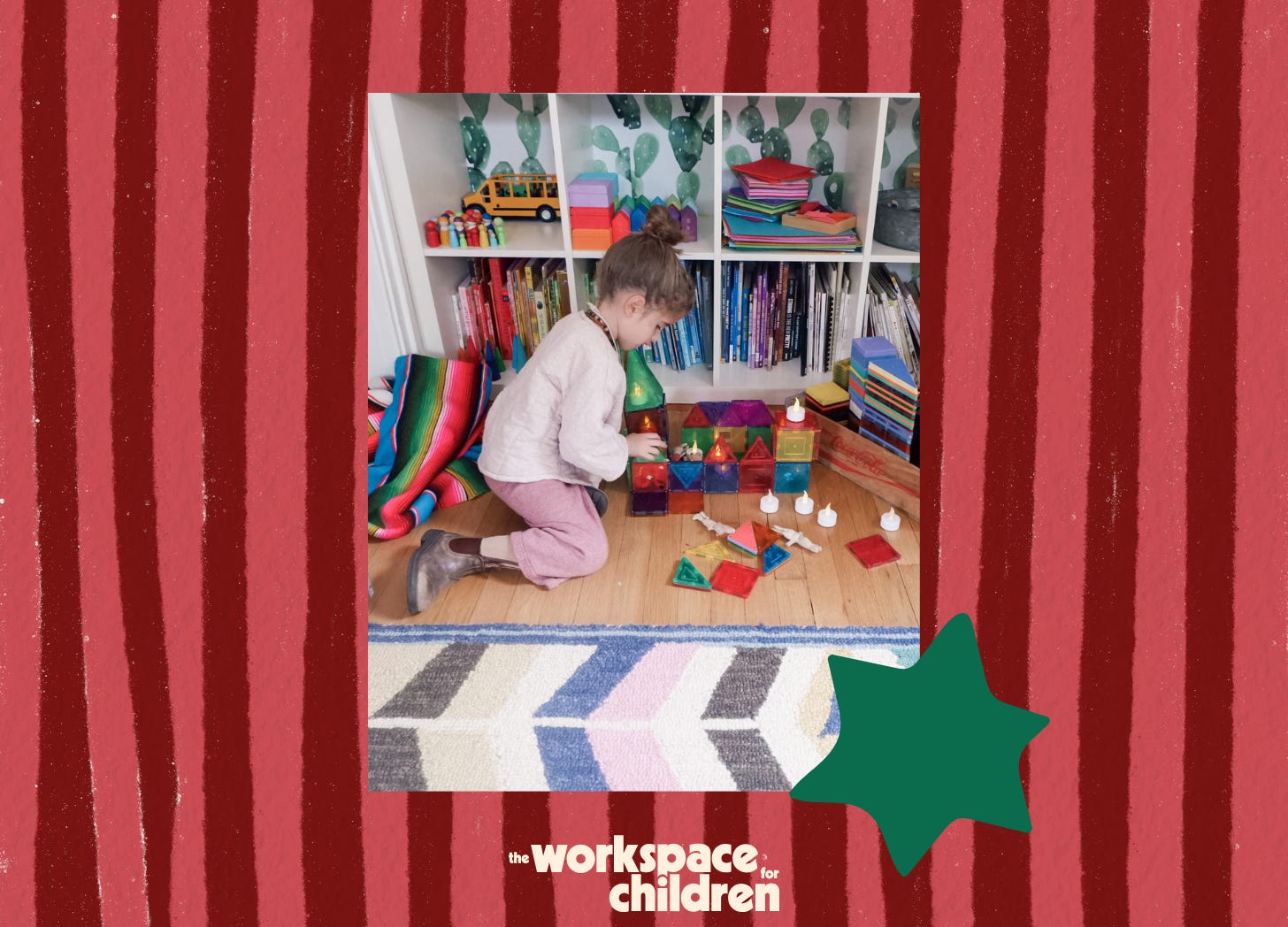
Most activity cards and activity books are the wrong tool
It’s like pulling out a power drill when the real job is learning how to hold the hammer.
These decks give you polished, parent-led instructions, but they skip the part where the kid leads, learns how to think, try, mess up, and try again.
Ideas like “make nature stamps” or “paint rocks for tic-tac-toe” sound fun, and they can be a great activity to do together. But if your kids are bored and you don’t have the bandwidth for becoming the camp counselor today, these ideas are not going to help you.
So what happens? You hand over a card. They stare at it. They need you to start it. Guide it. Help them finish it. You’re still in charge.
This isn’t a solution for boredom. It’s entertainment.
And over time, it teaches your kid that play is something that happens to them, not something they initiate. Which means the moment they’re left in charge of their own play, they default to “I’m bored,” because they’ve never been taught what to do with unstructured space.
If your kid is struggling to sustain independent play, they likely can’t (and shouldn’t have to) lead that kind of play on their own. First, they need to build the confidence and stamina that comes from unstructured, child-led play.
Then what SHOULD you do when your kid is bored, and you’ve got 82 unanswered emails, groceries that need to be ordered, picked up, and put away, and the laundry that is likely growing mildew in the machine as you read this?
Most parents do one of two things:
They launch into a list of ideas
Or they say, “Go figure it out,” and cross their fingers
Both backfire. One puts all the creative pressure back on you. The other leaves the kid feeling dismissed.
Here’s a better move:
The rest is for my paid subs
